Wednesday, November 26, 2008

Front triangle is done... mostly

Well I got a little discouraged last weekend... I thought I had the fork all jigged and straight but once I was done brazing and cleaned it up it was WAY off. I am not sure if I will try and fix it by reheating and taking the legs off, or just hang it on the wall as a reminder that anything can and will go wrong if I am not careful.
But I motivated myself to take my time and finish up the front triangle, I feel I am getting the feel for heat and being able to read the metal (even though the pictures don't show that). Last night I finished up a point on the head tube/top tube that didn't fill all the way in, but I realized how to recognize the metal temp and when it is approaching a critical temp... it's a cool feeling to know where that over heat line is and how close I am to it.


The seat clamp was a long preheat but I kept it pretty clean so I won't have too much extra clean up.


You can see here that the flux burned a little but it isn't as bad as it looks... I think it is more on the surface of the flux because it washed right off... but I have had a little more practice this week and I am way more comfortable with the temps.


The cable braze-ons were interesting because they moved just slightly which took them out of alignment but I am ok with it. My wife couldn't even see that they are out of alignment so I figured that is a good sign.


This week end I might be able to work a little on the rear triangle... but we will see.


Monday, November 17, 2008

Now for the fun part...

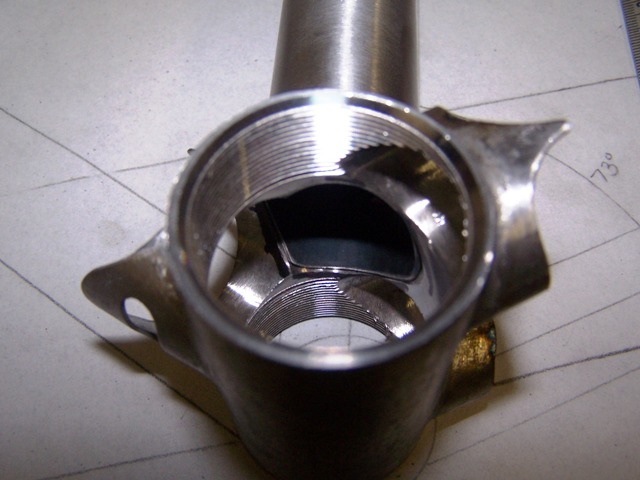
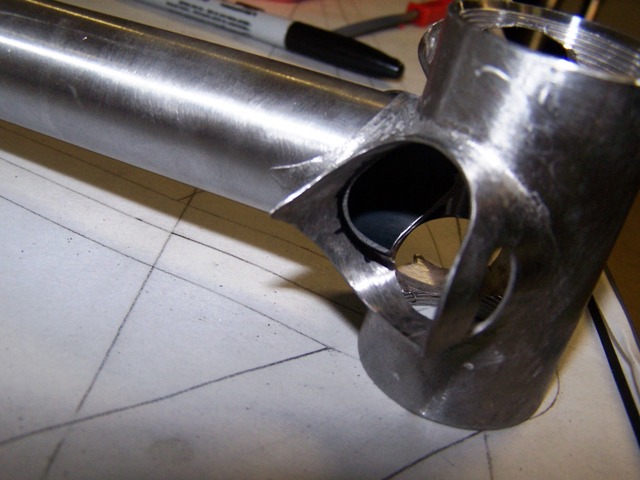
This was really exciting and absolutely scary as hell all at the same time... I decided even thought this is my first frame I wanted to do some nicer detail touches. So internal cable routing is one of them along with some other braze-on goodies.

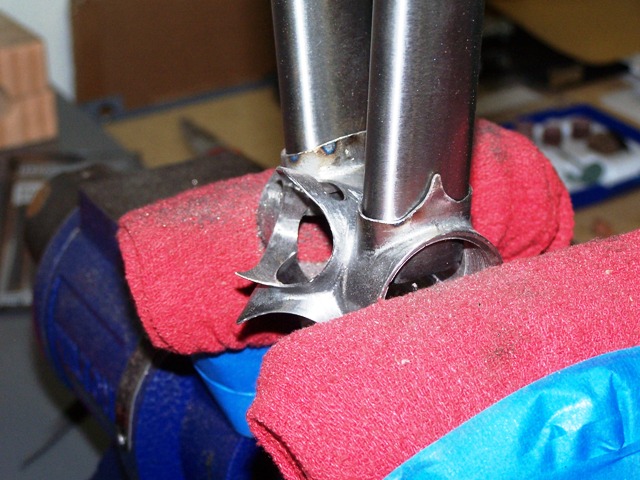
After looking at some other builders designs and learning from what I could see in their production photo's I new to use internal brass tubing and braze in these ferels. I decided that I will try to do an internal fillet because there are some little gaps to fill since the angel of the ferels doesn't match the tubing cut/mitter very well. As you can see I loaded up the silver... I think it is either because I couldn't tell that the hole was filled or if the silver expanded a little after it cooled.

*** A side note*** take a look at the head tube... yeah it was the worst of all my joints because I wanted to make sure there was silver going into the mitter... but I also got some gaps in weird places... so I had to go back reheat and add silver... wow that is ugly!


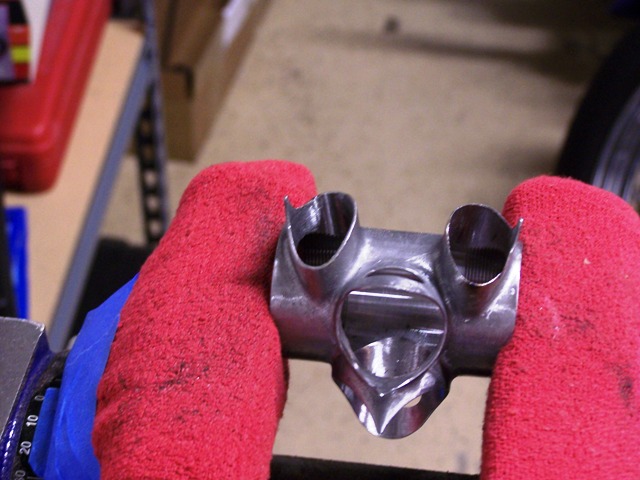
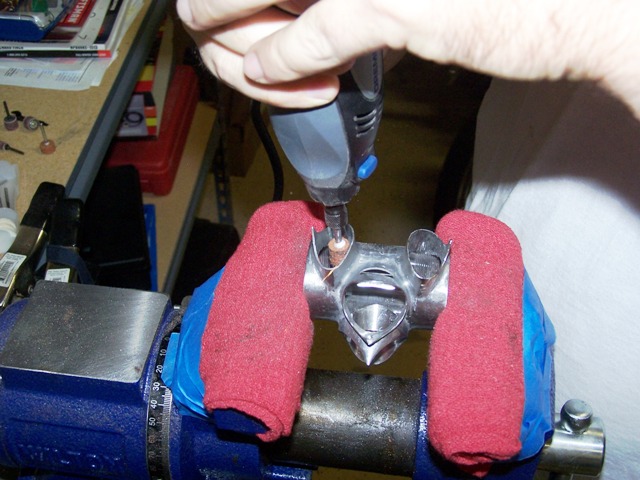
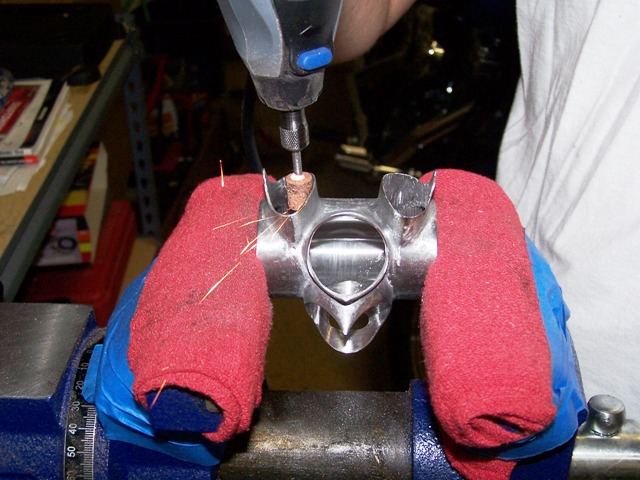
So here I started to cut off the excess ferel to open up the inlet for the cable housing... I was very nervous because I really didn't know whatto expect.

More grinding and taking my time at that!


So after some filing and triming of the inside... it doesn't look to bad?


Well this was well worth the experience because I am more than happy with the outcome, even though the holes aren't the same size or length they do match up well enough that I will put braze-on internal cable covers and it will look spectacular. Don't get me wrong I want to leave these open because with paint on them you would barely be able to notice the the slight alingment issue... but with brased on covers over the holes I will be able to align them perfectly and symetrically. I will work on a way to match the holes up so they will be able to be left un covered to give a cleaner look.


I really wish I could get a shot if the internal fillet, it came out really nice.
I definately learned alot with this round of brazing, I also feel that filling gaps with 56% silver is much easier than working with brass rod. and I will really focus on taking my time in heating and watching the temps on the next round of brazing as well as keeping the silver in the right place. I did a little reading online and figured out a few things I was doing wrong and to help keep everything much cleaner. I eventually want to be able to braze well enough to just clear coat a frame and showoff the seams.

the ugly brazing...

So following the Paterek building plan I brazed the drop outs... even though they look pretty bad here the drops look pretty good with the basic clean up below.


The rear drops wen't pretty bad but I did recover from it pretty easily... I decided since I had large gaps to fill I would try using brass rod instead of silver... the one thing I forgot was the flux I had is for silver... so as you can see below I cook the flux pretty bad, I will know better next time.

the front drops after some basic clean up... I will use the dremel to clean out the little triangle on the lugs.


The black tar is actual hard as a rock and hard to remove...


After lots of dremel work they came out pretty decent... I will know what not to do next time. Even though it looks like I had to grind on the tubes... I didn't that is just file marks.


I wanted to show what the jig looks like...

So here are a few pictures of the home made jig to hold the bottom bracket to the seat tube and then the Head tube to the down tube.


Pretty simple; I used a 4 foot section of 1/4" angle steel, clamped it in the vice nice and square and plumb. Then set up a couple steel angle plates (used for fence building or joist anchors) clamped square then a long threaded bar (left long to use for the head tube when the front triangle is set up) with a hole saw cut in half acting as the BB cup/holder. and a v-block to keep everything as square as possible. It helped to stay on track with Patereks manual without spending money and time of fixtures.

Here you see the head tube/ down tube fluxed and ready to braze in the fixture... the fixture head up very well to brazing and I set it up to be as open as possible.


I didn't take any pictures yet of the head tube/ down toube after brazing but I will tell you that was the hardest so far and I had to go back and dump more silver in it to make look better. But I got good penetration and it stayed pretty plum and square.

Now for the Bottom Bracket to Seat tube

I fluxed all the joints that I was planning to braze at the same time, so same as before I still didn't flux far enough away from the joint to keep down the discoloration. I came up with a Jig that requires no machining and just clamps together and uses bolts for leveling. I will be able to use this jig for most of the sub assembly and rear triangle.


Below you will see I didn't do to bad with this joint almost all the way around got good silver penetration and I only overheated area that were very thin or not properly coated... not bad I would say I am getting better but I now what the next 5 joints already look like...


I definately realized why Richard Sachs puts so much flux on and coats every single part that will even get closed to heat... it aids in less clean up and keeps the metal in better condition.


Here I did some quick clean up after dinner and it looks pretty good... except the lobe of the lug between the chain stays... it got penetration but left a little gap at the tube and tip...


So I went back and reheated the tip of this lug and dumped way to much silver in it... but it still cleaned up pretty well.


Next is the head tube/ down tube...


The first brazing experience... starting with the fork crown

So I started my first brazing... it's amazing how much I learned from reading and watching video's on youtube. I started by fluxing the joint and holding it in a vice for the brazing.


As you can see below I overheated the crown a little and didn't cover far enough away from the joint to keep the steel from discoloring. Beleive it or not this joint came out perfect with only a couple little spots of excess silver.


Now onto the fixturing and brazing of the BB/ST and HT/DT...

Friday, November 14, 2008

Getting close to the first couple brazing joins...


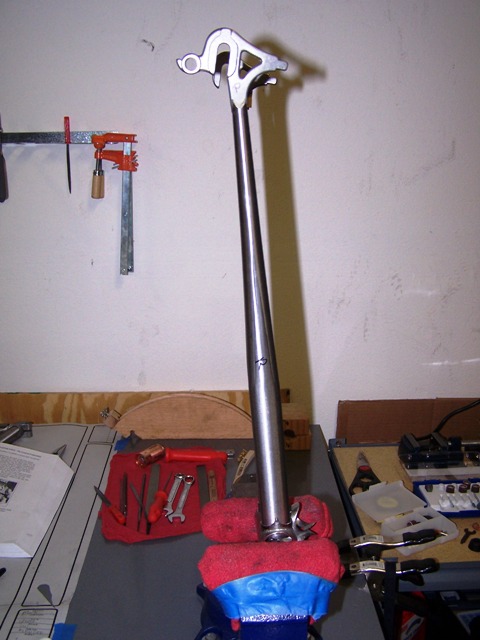
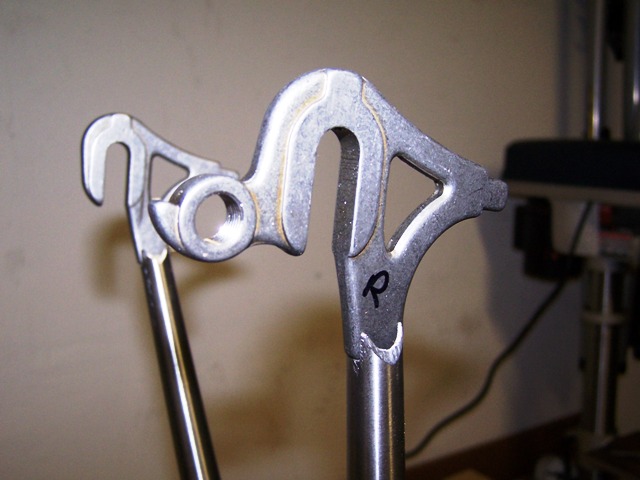
Last night I worked on the fork; cut it to length by taking about 2 inchs off the upper leg and about a half inch of the lower leg. comparing it to a really tight carbon race fork, it will have about a 1/4 inch more room between tire and crown all the way around the tire. I prefer this fit incase I want to ever put fenders on (they would still need to be speed fenders as I am not putting eyelet braze-ons on)
I also mitered the steerer tube to fit the profile of the crown but I will still need to file off about 2mm once I am done brazing.
After lining everything up my big concern here is making sure the legs are parrallel to each other after brazing because they both rock back and forth a little bit. I am think of pinning them and then tack brazing then first to insure as little movement as possible. I also need to come up with a couple C clamps to hold the tips of the lugs flat to the tubes for brazing.
More to come after tonight because I will be brazing tonight and tomorrow... I will get lots of pictures of that.

Wednesday, November 12, 2008

I'm Mitering (moving right along) now!

So this is moving fast now, Last night I was able to clean up the bottom bracket to just leave a little sanding and mineral spirits cleaning for brazing. And I have to admit I was very nervous about mitering the down tube/head tube joint, I was very cautious in starting and it ended up taking me about an hour to miter this cut and get it to fit flush to the head tube.
I admit I really thought I screwed up when I did my 1st test fit because it was way off, with frustration starting I sat back and assessed the problem. Luckily for me my engineering aptitude (that everyone always says I have) kicked in and I realized that the "waist" or side peaks were way to high slightly misshapen. So I filed them down just a little to see if I was right... yup that was it.

Once I got a nice clean fit, I filed and checked, filed and checked, and filed and checked again. But I couldn't get that fit of absolutely no light shinning through? So I sat back and read a little bit and pondered how serious I need to be with this fit. So I decided to reshape it a little more and see what different filing will do, I fugured when I read so many builders blogs about making sure no light is shining through at these joints then I had better take this serious.
So another 15 minutes of filing I came up with this fit below. It could be better but I feel it falls into the criteria that Tim (Paterek) instructs in the manual and many other builders strive for in their blogs.

Once I was satisfied with the miter I nervously checked the fit between the head tube/down tube and the bottom bracket/down tube... it is so close to the drawing that once I braze these together the BB facing and cuting tool will just barely nick a piece of the tube when it is doing it's thing. You can see in the pictures below how clean the fits are.
Now I basically just have to cut the fork blades (straight legs with plug in drops) and prepare it for brazing as well as prep what Tim calls the subassembly with mineral spirits and some sanding.
Not sure if I will braze this week or hold it for friday night and saturday because I won't have much time tonight and tomorrow night because that is Hannah and me time.


I will be using pins to keep the frame aligned because I don't have much in the way of fixturing so for this frame I will clamp everything on V-blocks (seen in the picture above) and then pin the HT/DT for brazing and then pin the BB/ST for brazing to follow the Paterek build up.
If anyone has any suggestions on pining or clamping feel free to let me know...


Monday, November 10, 2008

Now I can start prepping the lugs...


Well I got the tubing set I ordered from Novacycles.com it is a basic Dedaccia Crmo OS package with lugs and bottom bracket. I think it is a perfect blend of price and set up for a beginning builder... meaning if I screw it up it won't hurt so bad in the wallet.

After ogling the tubes and lugs I decided to get started on boring out the lugs to fit the tubes with the recommended "slopy fit". After eating my lunch sitting on the garage steps and thinking about all the things that could go wrong here... I took a few deep breaths and got started.


in the photo's you will see the lugs clamped in the vice, I used a dremel to grind out the sockets (typically needed to take off about .001 of an inch to make the tubes even enter the socket. The 1st lug (the lower head lug) took me about 1.5 hours just to grind out enough to fit the tube with the slightly sloppy fit. I learned qucikly how easy it is to snag or spin the grinder outside of the working area on the lug (see the two grind marks on the point in the vice).

The next lug was the top tube/head lug and I tried a couple different bits on the dremel and found that the sand paper bit works best for removing more material (but the stone shoots lots of sparks for the dramatic effect) it only took me about an hour on this one.


Not pictured is the seat lug and bottom bracket, I ended up doing them on Sunday evening and was able to bore and finish the outsides in under 2 hours.

I think everything fits pretty well and I have the right "sloppy fit" I need for silver brazing. Tonight I will start mittering the tubes which I think will be a more tedious process but we will see.

The 1st weekend of shop work...


Ok I got started this weekend on the intial prep of the Lugs for my frame, by the way I am building a custom geometry road racing frame. I typically ride race frame geometry and have been very happy with it even on centuries.
Even though I am of the average size road frame geometry user I figured I will try a little custom sizing for myself. I am working with a combination of the "Paterek method" and using the free BikeCAD program for my figures and measurements.
As I was already expecting... you don't just jump right into grinding and welding the tubs together. From the short time I worked with my dad in a machine shop I already new that preperation of tooling, work area and material is the most time consuming part of metal fabrication.
So first I had to fabricate a safe way of holding the lugs while I grind and file them... I would have just bought a "mandrel" but they are around $300 from a machine shop/ frame building tool company. So I figured a little homemade mendrel will work if I am careful (see 1st photo below) made from some brass pipe, a center bolt for compression and some grease to keep it from sticking... I know it looks a little like something a caveman would build but surprisingly it works really well.
Next I had to come up with a decent way to hold the thin wall tubes for mittering... after looking online i realized I could just make it out of some hardwood blocks and the drill press (seephot#2) I haven't started to use it yet but it will work just fine... of course after making it I noticed in the Paterek manual he mentioned just using a Park repair stand clamp for safe tube holding. Duh... I can't believe I didn't think of that!
The last thing I finished up on Friday night was the drafting of the frame design and measurements. I kept this simple and just taped some drafting paper to the table and drew it out according to the Paterek manual and a website I found called ivycycles.com that has a nice little tutorial on drafting a bike frame. (see the last few photo's)

The battle ground is set...


After a solid month of researching and trying to talk myself out of this project, I have built up a nice little work area in the garage. So from now on I will refer to the garage work area as the "Shop".
Keeping my tools to a minimum of basic hand tools and just a drill press, along with a vice, metal work table, dremel, files and some basic drafting utensiles I am trying not to spend much money. I did underestimate the key tool... the brazing torch and gas tanks.
I don't know if it is just here in California but it is EXPENSIVE to use a brazing torch set up. After combing various pawn shops, welding supply stores and the all mighty internet. I could not find a torch setup (not just the torch and hose... I need tanks, regulators, a few torch heads, flint striker and goggles)for less than an initial cost of about $450. Or renting everything would add up to about the same after only 3 days of rental fees.
That is just to much of an investment for me... so I decided to buy a Oxy/mapp torch set from Sears. I know, I know I read all the debates on the framebuilders forum and most people don't outwardly scoff at a Mapp gas setup, but I know that the Acetelyne torch setup is the prefered method for speed and accuracy.
I ordered the Paterek manual from Tim's website, I have to say I was surprised at how thurough it is at walking the reader through every step of the process. Without imparting to many confusing directions or opinions, I have been able to read a chapter and then set it down and start working without having to refer back to it every 10 minutes.
Now the fun begins!

The lessons I am learning are amazing and really fun to work out...

The pictures below are the work I did last night, finished grinding the bottom bracket sockets.
Notched out the seat stays to fit the drop outs...
And the big big moment... doing my 1st miter on the seat tube (Tim calls this one the most forgiving miter and he is right)

I think that many of the lessons and techniques I have learned from wood working are carrying over into metal working very nicely.

bottom bracket, right side done (before finshing sanding)

bottom bracket, right side done (before finshing sanding)
the left socket is just starting to get ground, notice how thin the walls of the right socket have gotten. there is a lesson there and you will see in following pics!

grinding with a stone

grinding with a stone
it took a while with this stone but with the tight corners I had to use it because I only have one small sand paper bit left

ooh ahhh... a little sparks flyin

ooh ahhh... a little sparks flyin
That lesson I spoke of earlier is happening in this pic...

Ahhh... oh DOH!

Ahhh... oh DOH!
is that blueing? Yup that is the lesson that I learned on this socket. the grinding stone heats the metal very fast and as that wall gt thinner it started blueing. Bad, bad, bad! so I will have to sand and reshape that wall a little because I even got some chipping around the blue.

Chain stays with the drop outs notched in...

Chain stays with the drop outs notched in...
So this one was a little scary because I wasn't sure if I would get them straight and true... it ended up ok but I can do better.

Notching wasn't to hard but keeping everything even was hard

Notching wasn't to hard but keeping everything even was hard
I decided to try the bevel sides on the notch, I think I can do better so I may do the stays again?

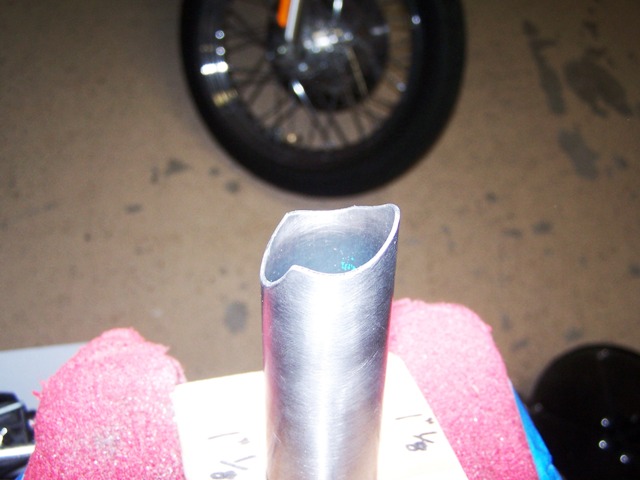
The big moment... my first miter!

The big moment... my first miter!
I should have taken some before during and after shots but this went pretty fast actually. this is the ruff cut, I rounded it out better and got rid of that hump on the back wall

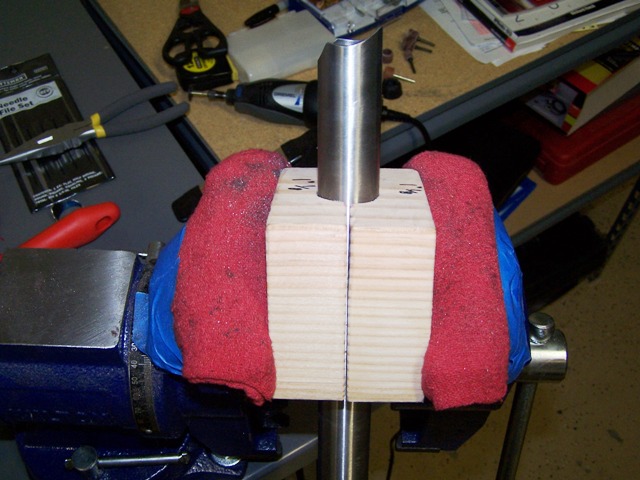
A little different angle... check out my home made tube holder... works like a charm!

A little different angle... check out my home made tube holder... works like a charm!
I am so proud of the wood block tube holder... now I just have to make the other sizes

A quick fit test...

A quick fit test...
Not bad forthe 1st miter and fit check... I only need to file the inside edges to match the bevel of the inside of the BB

Nother fit check after some finishing

Nother fit check after some finishing
still need to angle the inside of the edges then it is done and ready for finihsing before brazing. I also still need to finish the socket wall to clean up any uneven edges or tooling marks